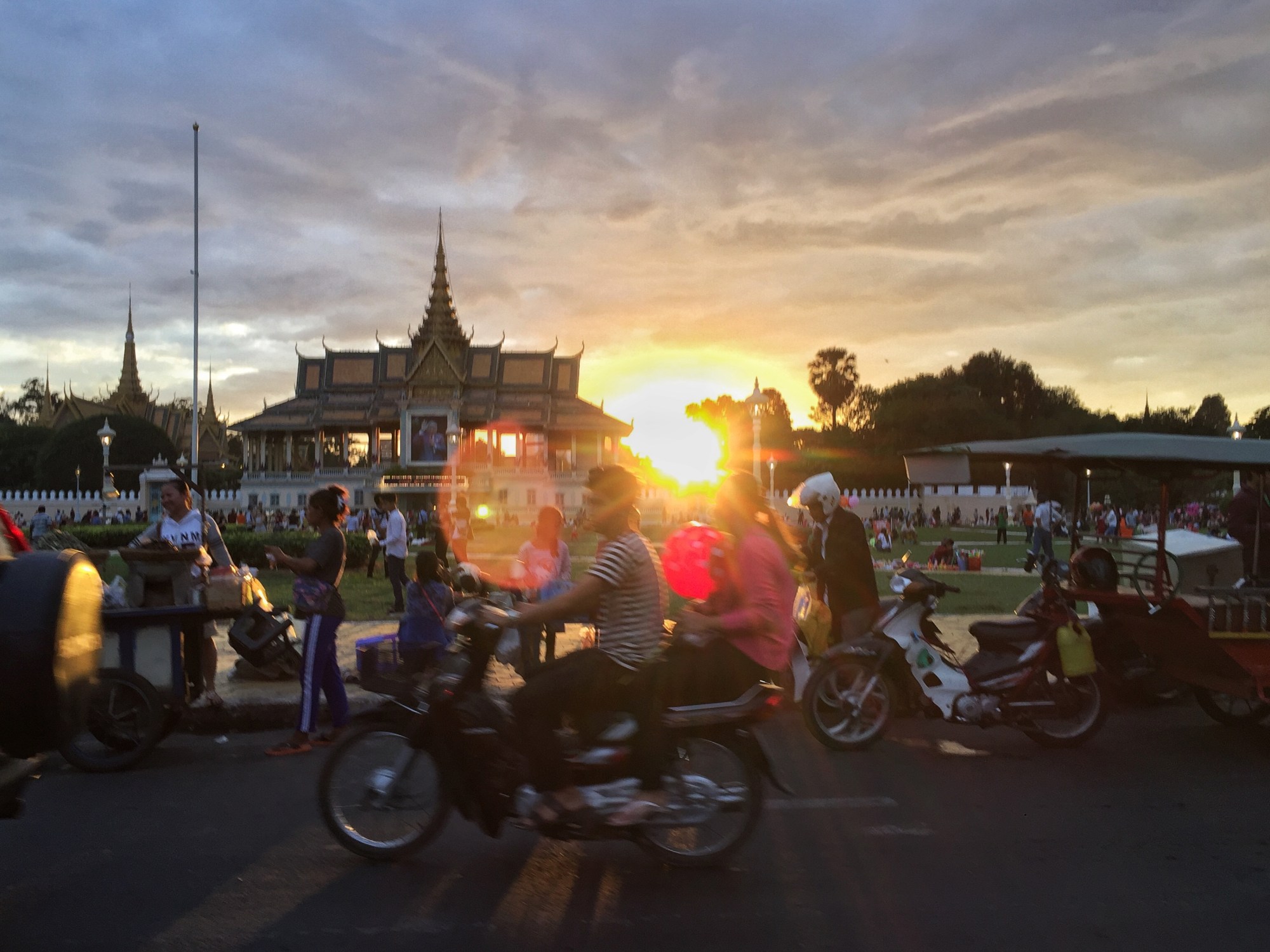
“How was your trip?”
I have such a complex relationship with this question. What can I say? How can I fit the year or six months or two weeks I’ve been gone into a few sentences of casual conversation? And I’m never happy with what I come up with – “It was phenomenal!” “Best year ever!” – they never do it justice, and the oversimplification feels smothering. No, you don’t understand. It was the best year of my life.
But I hate even more when people don’t ask. Already in my head the days I have left behind are unravelling – just around the edges, for now, although I know that soon the leaves on the trees and the lines of the faces will begin to lose their sharp edges. The colours will fade. Smells become less intense, sounds dull – ever so soon, slowly but surely, until I have just the emotions left, only those last, best moments.
I know this process of distilling will begin regardless, and so when people don’t ask it speeds it up. It makes it feel like they never happened at all.
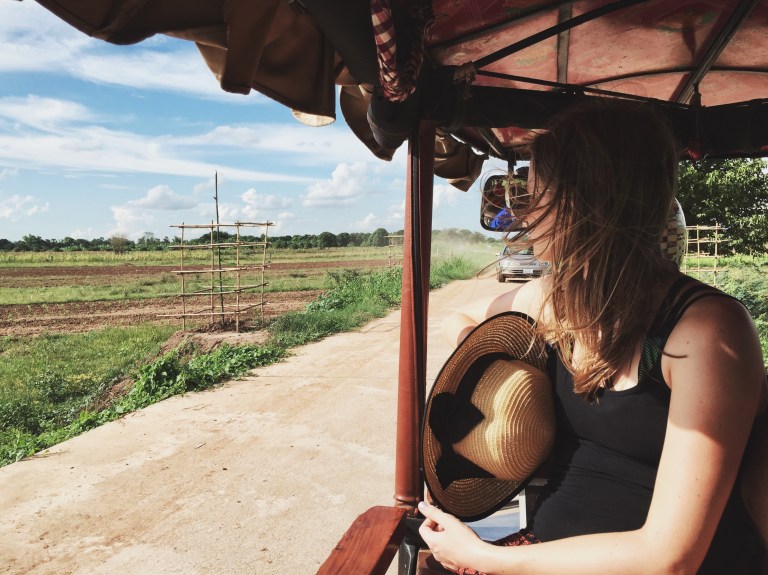
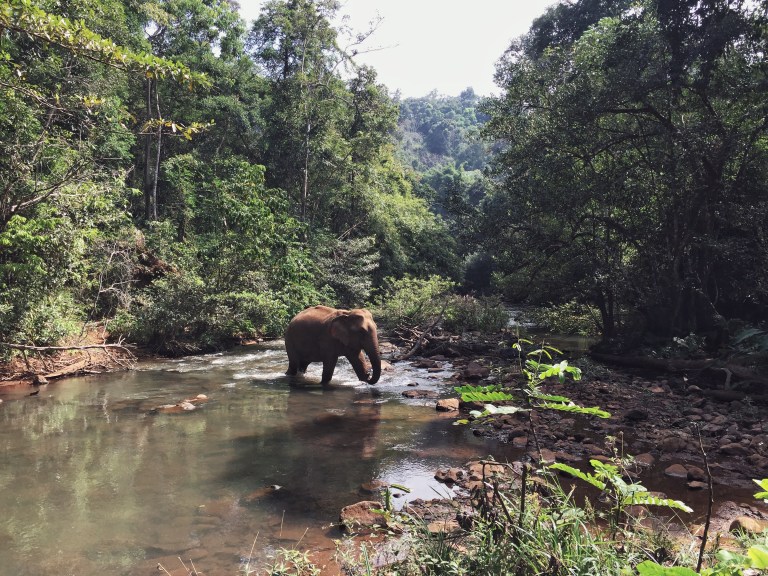
Now that I’ve come home from Cambodia I am trying to be honest. I am trying to not gloss things over – and yet more than ever those months can’t fit into a deployable answer to lob back at people. They ask me, “How was your trip?” In their mind’s eye I am riding elephants through damp dense jungles, I am sashaying my way through the packed alleyways of a night market, I am floating down a river surrounded by exotic birdsong and the buds of flowers whose names my tongue can’t wrap itself around.
“It was very… intense,” I say. The words come haltingly. I learned to stomp on the ground as I trekked through the jungle to scare away snakes – did you know that you can sweat so much that every inch of your body is covered in a glistening sheet of moisture several millimetres thick? My friend and I tried to explain, in broken French, to tourists on the backs of elephants why it is so terrible for their bodies to be ridden like that. For four days I ate nothing but banh mis that cost me a dollar each, because nothing’s ever tasted so good as the juice from that meat dripping down my chin. It wasn’t so glamorous, but it was beguilingly beautiful.
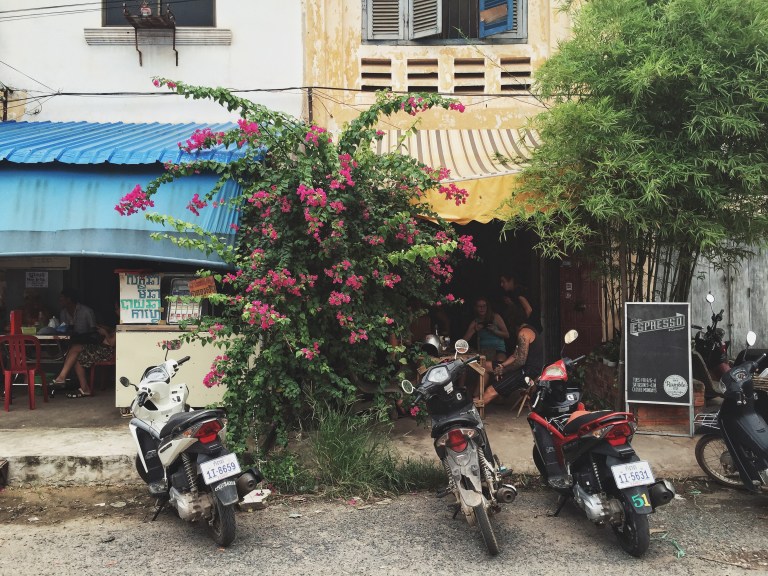
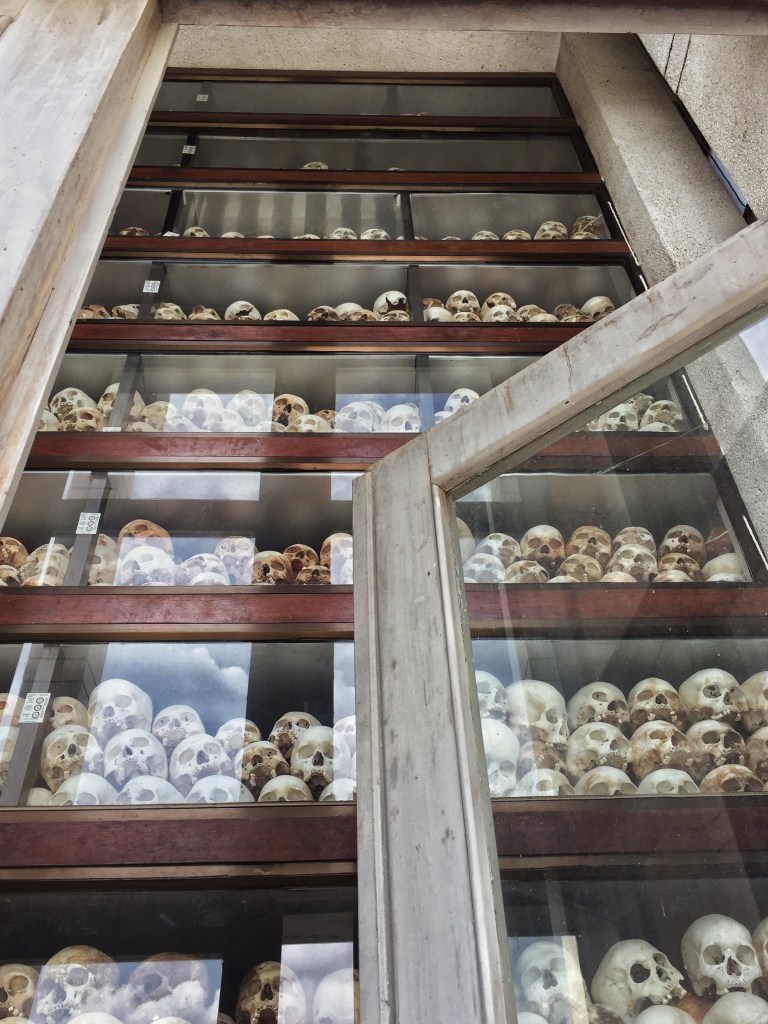
A month or two after I came home from my internship at the UN Assistance to the Khmer Rouge Trials I had dinner at my friend’s house. “You have seen the worst side of humanity imaginable, listening to those stories day in and day out,” her father said to me. And I hadn’t realized how much I needed to have someone acknowledge that. Yes, I gasped. I have.
So I begin to answer people – and then I think of the punches. The first one: “They’re not prosecuting rape as a separate charge. A woman would be raped, and forced to marry her rapist or watch her entire family be murdered. If a woman was only raped – if that was the only thing that happened to her – she was considered lucky.” It wasn’t until I flew home, sat in the Cactus Club at English Bay, held a glass of wine and told someone else this story, that it hit home to me how deeply fucked up that is.
The second one: she is sobbing in the stand. “Everything human was taken from my life. I was forced to be a man when I had lived as a woman for years. I was forced to marry a woman I did not love, I was forced to have sex with her, I had a baby with her. I have spent the last forty years searching for them. I have lost everything meaningful in life.” And all the while, the Cambodian judges and lawyers refused to refer to her as a woman, insisted on Mr Sotheavy. Toto, I’ve a feeling we’re not in Kansas anymore.
I think of the girl who got on the plane and left, twisted her head round and round like an owl in the tuktuk from the airport trying to drink this new place in – if I had stayed this girl I probably could have answered them much better when they ask. But in my head there was a buzzing as I absorbed these things, a blankness: how do you respond? Three months later I’m still trying to wrestle with this: how do I respond, to these deepest and darkest perversions of humanity?
“How was your trip? Are you glad to be home?”
Am I glad to be home? “Yes,” I say with relief. That one’s easy. “I am glad to be back in a country with sidewalks.” Have you ever noticed how beautiful sidewalks are? Sidewalks say so many things to me, now. They say, someone cares. Somewhere there is a ministry with money to make sure that the sidewalks get built and maintained – the maintenance is important – and there are people to walk on them, homes to keep them clean, a separation from cars in the street. “I am glad to back in a country with a functioning police force.” A country with a phone number you can call if your house is on fire or your brother’s broken his arm, and when you call this number someone will come and you won’t have to pay them to get them to help you –
But this question can be tricky, because sometimes people say, why a police force? And I must be honest. I must say, “While I was in Cambodia, there was a story in the news about how a prostitute was being chased by the police – she wasn’t there illegally, but they were chasing her because they wanted money or they wanted to rape her – and so she was running away, jumping from pontoon to pontoon on the river.”
(In my mind’s eye I can see her. I can feel the damp closeness of the Phnom Penh night, I can see the lithe figure leaping from boat to boat over dappled lights reflecting in the murky Mekong. She’s almost lost them. She’s almost safe.)
“Then she fell. She hit her head, slipped into the water, and the police stood there and watched her drown.”
People are silent after this. I can feel the atmosphere has changed: “Jesus Christ,” they say. “That’s fucked.”
“It is,” I agree. It is fucked. I don’t know what to say now. Usually we’re at a bar or a party, with people around us chatting to their friends and buying drinks; sometimes we’re in a coffee shop surrounded by university students on their laptops studying. Always we’re a million miles away from the kind of place in life where police watch a prostitute drown and don’t lift a finger to save her.
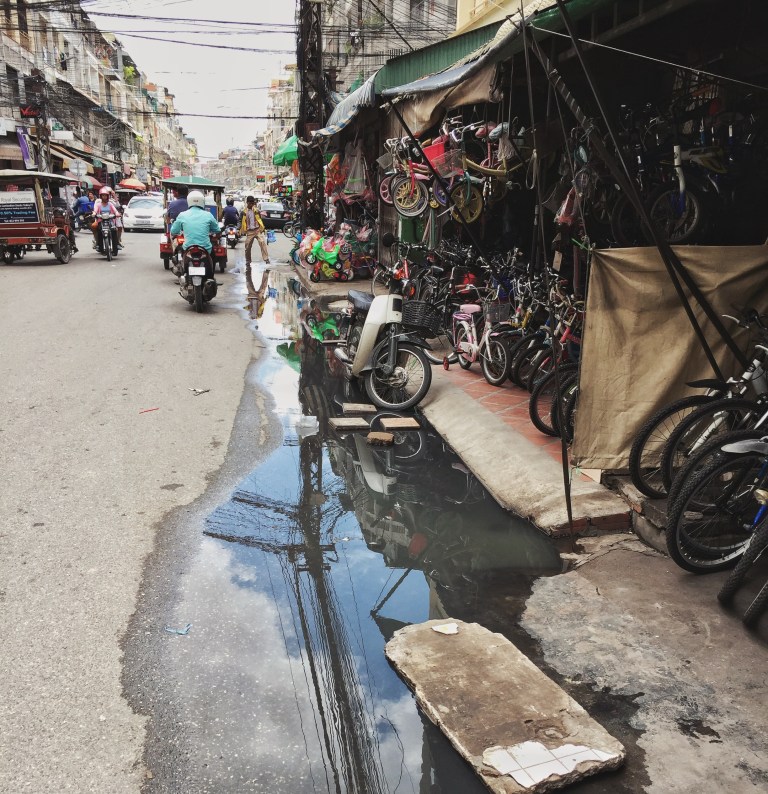
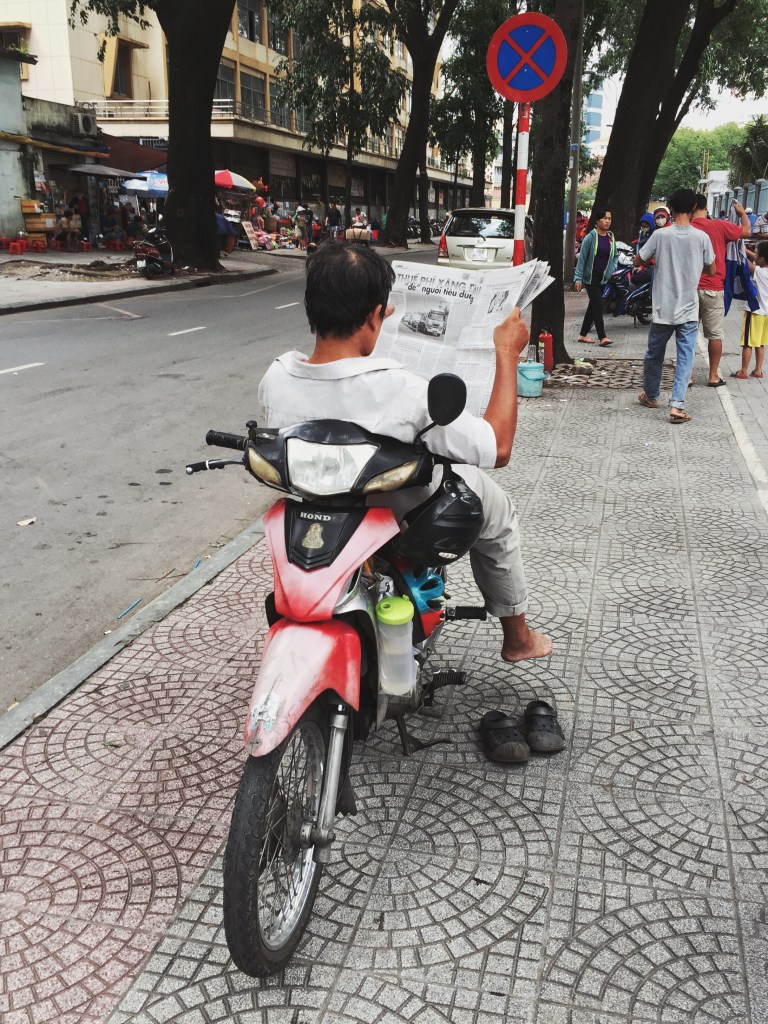
They blur after the first two punches. I stopped counting. Tuol Sleng, the torture prison turned genocide museum: I still can’t talk about it. Whenever it comes up the weight on my chest moves to crush my ribs and my tongue ties itself into a knot, thick and heavy and lead in my mouth, lead in my lungs. In Ho Chi Minh all the tuktuk drivers read newspapers when they’re not working; in Phnom Penh, they sleep. The dawning realization of what this means: Vietnamese people can read. They take an interest in the world around them. These are things that must be taught, and no one has been teaching this in Cambodia for a long, long time.
Sidewalks. Newspapers. I have noticed, since I’ve been back, that it’s not that I have less emotional empathy – in fact, I think I have more – but its durability is next to nothing. I get so tired so easily. I have a weight on my chest that is not mine, and yet here it is. These little tiny insignificant pieces of life suddenly have so much more emotional substance for me now than they did before, more than they are built to carry: I look at people walking along sidewalks and people reading newspapers, and I see a society that works. It’s by no means perfect. But at its most basic functions, for a vast majority of people, it works.
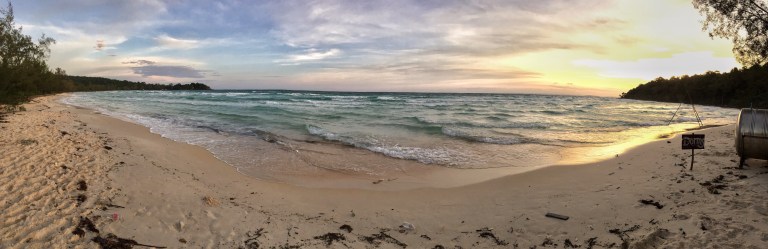
“But it was so beautiful,” I say to people, after a long pause. “I swam with bioluminescent plankton!” We’d pile into a bus on a Friday afternoon, drive for a few hours to the coast, and when night fell we’d trip down to the beach below the hostel and we’d swim out a few paces into the Gulf of Thailand and they’d be there. I gasped with delight the first time I touched the ocean – waves smooth and clear as sea glass, water soft as a bath. Even at night it was so warm we’d stay there for hours, trailing fingers through the ocean to watch whole worlds burst forth beneath our fingertips. I looked up at the stars in the sky and then down into the water and saw the same electric blue lights explode in velvet darkness. You could go a little deeper into the water, and move your arms or legs, and it would look like you were wearing a spacesuit of light, as if you were an astronaut exploring some unknown galaxy. I have never seen anything quite like it. I don’t expect I ever will.
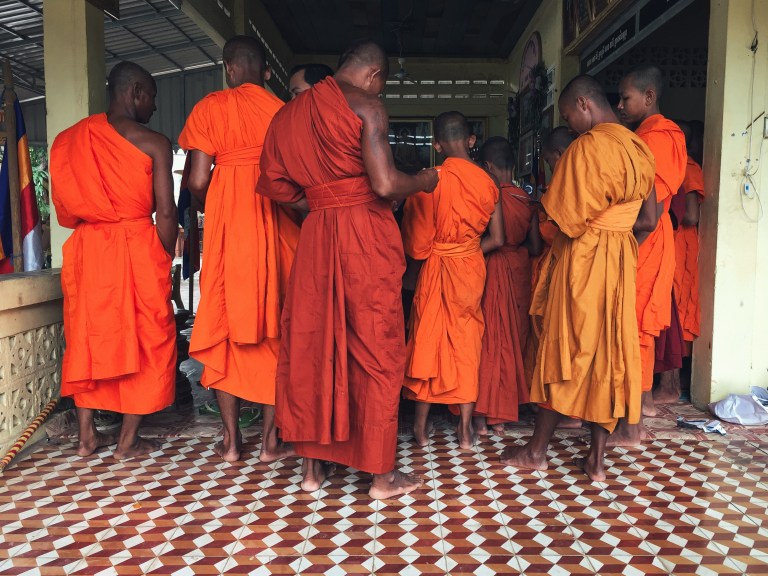
And Cambodians are so kind. Smiles split their faces in half as easily as a switch flicks on a light and they’re just as genuine, just as warm. The bizarre feeling – half apocalyptic, half delicious – of hot sun on your legs on Christmas Day. The assault on your senses of pungent raw meat, Thai basil, durian fruit in the market. Sunset soaking the rice paddies. Sunrise on monks’ deep orange robes.
“How did it change you?” I wanted to hug my mother’s friend when she asked. This – this I can answer. The older I get, the younger I feel – not sprightly exactly, just an awareness of how very small I am in the world. There are so many things to see and absorb and learn and feel. There are so many ways to love, there are so many ways to be hurt. Punches are things you can heal from but they are not things you forget: the bruises have faded and you can still see a white fist flying out from the darkness – that moment of impact is forever.
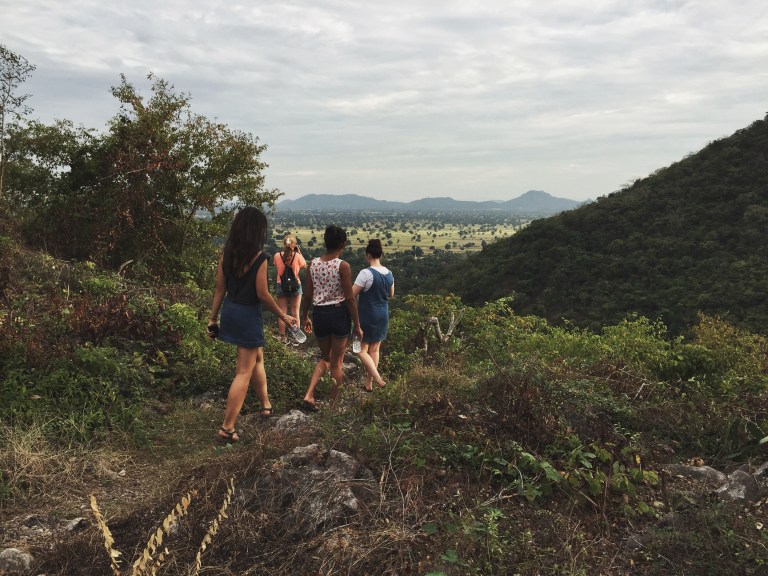
The last punch: a hilltop just outside of Battambang, and the sun going down over the lush farmlands around us spread flat like a green chequered picnic blanket. Someone has dipped a paintbrush into a pot and made long, smooth strokes over the sky, until it is a streaky tapestry of orange and blush and dove silk grey. You want to enjoy it, to lose yourself in the moment of beauty. But in this country no beauty is unadulterated, and so behind you is the entrance to a cave; over the lip of the cave the Khmer Rouge soldiers shoved hundreds of people to their death. Cambodia is haunted by so many restless souls.
That night we went for dinner at a restaurant in town. After the meal I got talking to the man who owns it. For centuries Battambang has been famous for the artists it’s produced, so I asked him where the best galleries in town are.
He told me where a few of them were, but he shook his head. “So many of them are closing,” he said. “There is no support from the government. It could be so much, but without help it’s dying.”
We spoke for a long time – about how difficult it is to love a place that has poured so much hate into itself, pushes the wounds away, tries to pretend they don’t exist. He was from New Zealand. “I’ve been here for five years,” he said. His eyes held that kind of emotional exhaustion I had never seen before coming to this part of the world. “I’m going to leave soon. If I stay any longer I’m going to end up hating it.” I thought of the hilltop holding the cave, of all those anguished souls pressing against my skin and my heart. I have only been here six months, but I think I must leave soon, too.
Before I came I had many people tell me Cambodia was their favourite country in Southeast Asia. “You’re going to love it,” they said to me. I can see why on the surface it’s easy to love: it’s cheap, it’s beautiful, the people are kind to strangers. The simplest thing is to either ignore the beauty and see only the horror, or to push away the horror and take home only the beauty with you. Somehow I have come home with both.
“How was your trip?”
 Letters From ____